


Georgia Department of Audits & Accounts
Auditing the auditors.
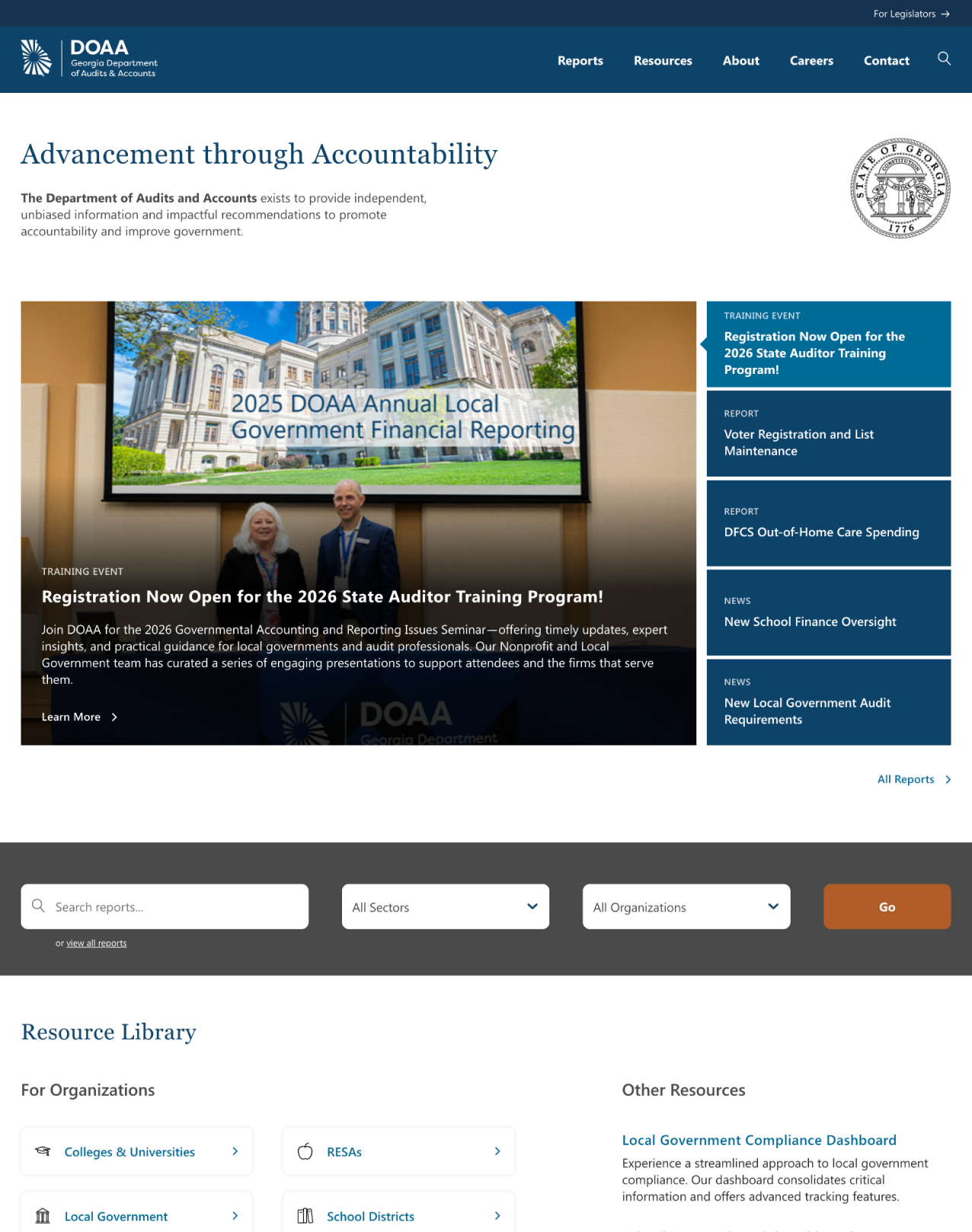
The agency that audits every institution in Georgia had a website where nothing could be found: not the reports, not the deadlines, not the forms a school district needed to comply with the law. We spent a year untangling it, research first.

SERVICES:
User Research· Information Architecture· Branding· UX/UI Design· WordPress Development· Systems Integration
THE PROBLEM
The Department of Audits and Accounts publishes the audits of the entire state of Georgia: every agency, every school district, every dollar. But its website was working against the work. The global search returned zero report results, and nobody could tell. Reports could only be browsed by year, which no actual user thinks in.
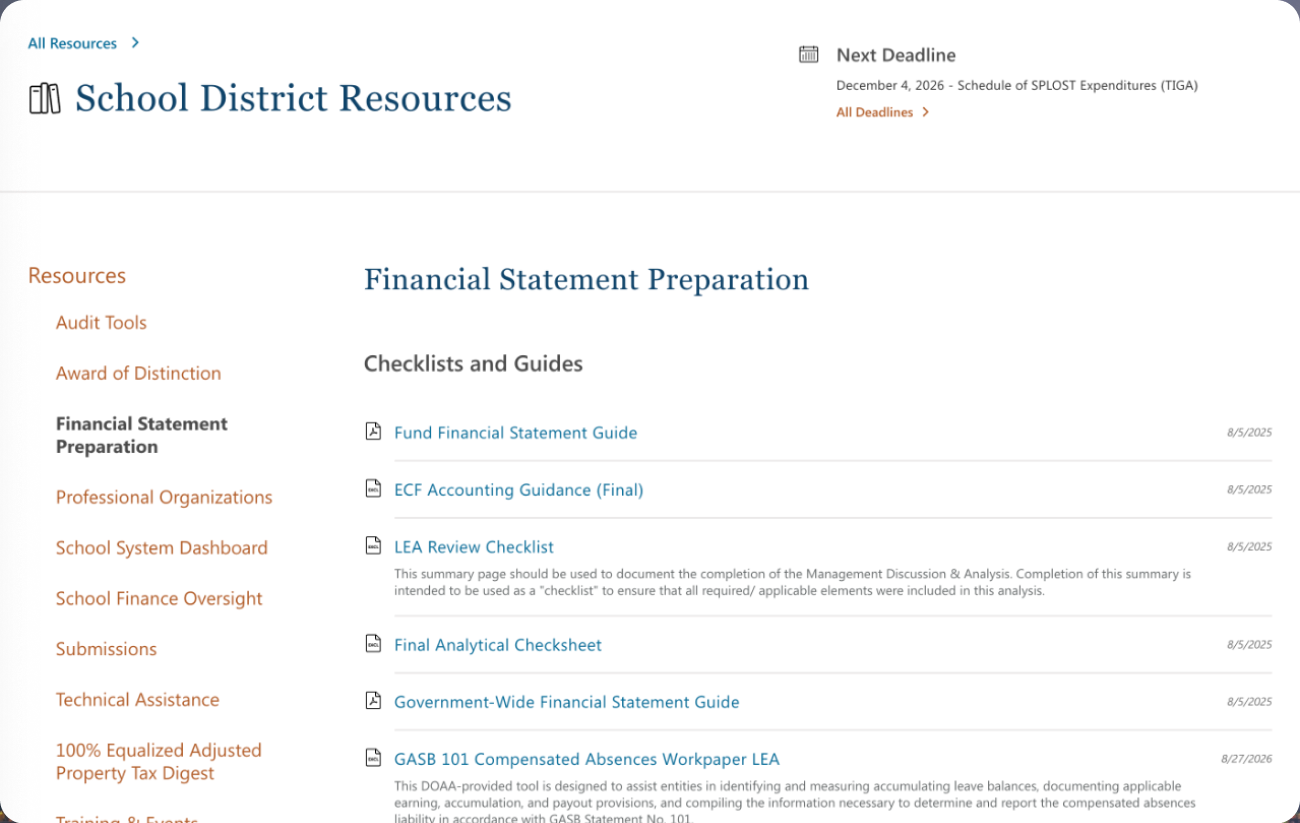
And the reports were only half the site. The other half was a decade of accumulated obligation: submission portals, statutory deadlines, templates, guides, serving eleven very different audiences, from county school districts to non-profits to architecture firms, shuffled into buckets so broad that nothing had a findable home. The site’s own most-searched terms were a map of everything the structure was hiding: salary data, affidavits, submission logins. These weren’t optional visits, either. School districts, local governments, and non-profits are required by law to submit to DOAA, and the site they had to decipher to do it was working against them. When search failed, and it failed constantly, people called DOAA, and the agency’s staff spent their days being the website’s navigation.
The CMS was at end of life, updates needed a developer, and the site wasn’t built for phones, in a state where legislators read everything on one. An accountability agency’s site was quietly failing the people accountability is for.
WHAT WE DID
We didn’t start with design. We started with thirteen interviews across every kind of person who touches a DOAA report: the directors of the Senate Budget and Evaluation Office and the House Budget and Research Office, county school district finance officers, and DOAA’s own leadership up to the Deputy State Auditor. One finding reorganized everything: nobody looks for a report by year. People hunt by sector, topic, county, agency, policy area. So that became the system: a six-way taxonomy powering filters and a search that weighs titles over body text, and actually includes the reports. (The oldest reports stayed findable too, at the specific request of the people who use them.)
Then the untangling, which was the real excavation. We inventoried every resource, deadline, and submission process on the old site, interrogated what each one was actually for, and rebuilt the whole mess around the people it serves: eleven user groups, each with its own section, its own step-by-step submission guides, its own deadline tables, and help where the questions actually come up. A new finance director at a small school district, the person the old site punished most, now has one place with everything the law requires of them. The things people phoned DOAA to find became things they find.
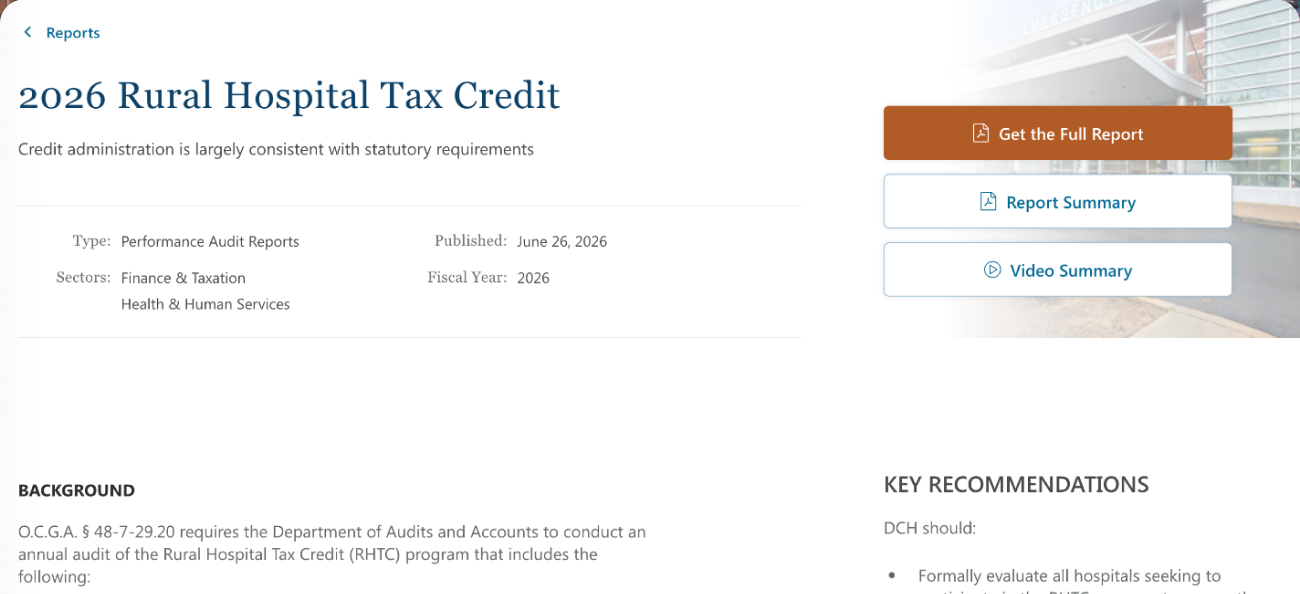
The reports themselves never left DOAA’s systems, and that was the point. Their team runs a reports application of their own; we integrated WordPress with it directly, pulling reports, sectors, and summaries live through their service layer, so the public site always reflects what the agency publishes, with no copy-paste middle step.
Alongside the site came the brand: a refreshed DOAA identity, a style guide, and redesigned report templates for both financial and performance audits, so the documents themselves, the agency’s actual product, got the same treatment as the website.
And because this is government infrastructure, the unglamorous constraints were honored: 129 redirects so decades of links survived, access controls so each division updates its own section without a developer, and a build that degrades gracefully for the 11 percent of visitors who were still on Internet Explorer.
THE OUTCOME
The site went live in early 2022. Georgia’s audits are now findable by the people they’re for: a legislator’s staffer, a journalist, a new finance director in a small county. DOAA’s own team runs it, division by division.
The relationship didn’t end at launch. DOAA brought us back for their intranet, for scoping the Open Georgia transparency site, and in 2026, for the audit: when the federal accessibility deadline arrived, we turned our own practice on our own build, a two-round WCAG 2.1 AA audit, every finding remediated. The auditors’ website, held to audit standards.
- in state spending held to account
- $37B
- reports, findable six ways
- 2,238
- report results from the old site’s search
- 0
- accessibility checks passing in our own WCAG audit
- 112/112
This could be your case study.
Every project here started as a problem. Tell us yours.

